Have you ever looked around your child's playroom and wondered why, despite having so many toys, they seem unable to settle into play?
You are not alone.
Many families invest in toys, books and activities with the best intentions, hoping to encourage creativity, learning and independence. Yet sometimes, the more choices children have, the harder it becomes for them to decide what to play with and how to get started.
The answer is not necessarily more toys or a bigger playroom. Often, it starts with looking at the environment itself.
As a play consultant, I believe that a thoughtfully prepared play space can make everyday family life feel calmer while giving children more opportunities to explore, create and play independently.
Here are some practical ways to get started.
1. Start with how your child plays, not how the room looks
A beautiful playroom is not necessarily a functional one.
Before buying storage, reorganising shelves or choosing new toys, take some time to observe your child.
What activities naturally capture their attention? Do they enjoy building, drawing, imaginative play, puzzles or exploring small objects? Do they prefer playing alone or alongside others?
Notice which toys they return to regularly and which ones remain untouched.
These observations help you understand what your child genuinely enjoys, rather than what you think they should be playing with.
A successful playroom should reflect your child's interests, developmental stage and individual needs. It does not need to look like a showroom to support meaningful play.
2. Offer fewer, more purposeful choices
When children have access to too many toys at once, it can sometimes be difficult for them to focus on one activity.
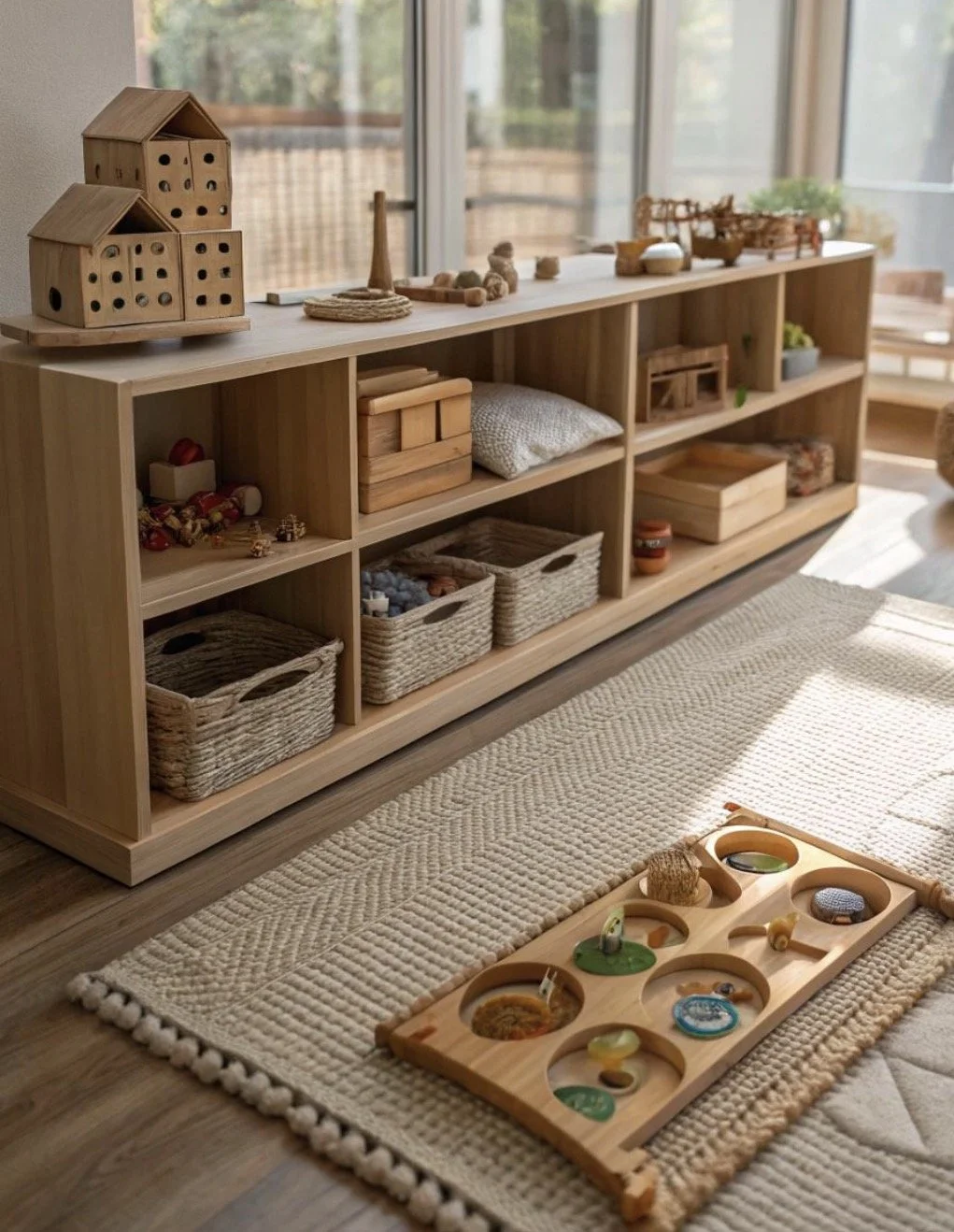
Instead of displaying everything, try offering a smaller selection of toys and materials that encourage different types of play.
For example, you might include:
A small basket of building materials
An invitation to draw, paint or create
A selection of open ended toys for imaginative play
A simple puzzle or matching activity
A few favourite books in a comfortable reading space
You can rotate some of the materials when your child's interests change.
The intention is not to restrict play. It is to make the available choices easier to understand and more inviting to explore.
3. Create clear areas for different types of play
Children benefit from environments that help them understand what they can do in a space.
You do not need a separate room for every activity. Even a small corner of a family living room can become a purposeful play space.
Consider creating simple areas for:
Creative play
Keep drawing materials, paper and age appropriate craft resources together so your child can see what is available and, where appropriate, access it independently.
Construction and loose parts
Building blocks, wooden pieces and other open ended materials encourage experimentation, problem solving and imaginative thinking.
Small world and imaginative play
A few carefully chosen figures, vehicles or natural materials can provide opportunities for storytelling and creative exploration.
Reading and quiet time
A comfortable seat, a small selection of books and a calm corner can offer a welcome alternative to more active play.
The key is to work with the space you already have. A thoughtful arrangement can be more valuable than adding more furniture or equipment.
4. Make independent play easier to begin
Independent play develops gradually. It is not something children should be expected to manage for long periods without support.
The environment can, however, make getting started easier.
Try placing toys where your child can see and reach them. Use accessible baskets or open shelves, and keep related materials together. Avoid storing so many items in one container that it becomes difficult to find anything.
You can also prepare a simple activity before your child begins playing. For example, place a few building blocks and figures together, or set out paper and crayons ready to use.
These small invitations can help children understand the possibilities available to them without requiring an adult to organise every moment.
Your presence, encouragement and interaction remain important. The aim is to create opportunities for children to become increasingly confident in choosing and exploring their own activities.
5. Take inspiration from Montessori and Reggio Emilia
Montessori and Reggio Emilia inspired approaches offer valuable perspectives on the relationship between children, materials and their environment.
A Montessori inspired space often emphasises accessibility, order and opportunities for children to practise independence.
The Reggio Emilia approach highlights the importance of the environment as the third teacher, recognising that spaces and materials can encourage curiosity, relationships and exploration.
Both perspectives invite us to think carefully about the experiences a space makes possible.
You do not need to follow a particular method perfectly or purchase an entirely new collection of wooden toys. Instead, consider which principles work for your family and how you can apply them in a realistic, meaningful way.
The most effective environment is one that supports your child while fitting naturally into your family's everyday life.
6. Think about your whole home, not just the playroom
Children do not always need a dedicated playroom.
Sometimes, the most useful solution is a thoughtfully arranged play corner in the living room, a small creative area near the kitchen or an accessible book basket in a bedroom.
Consider where your child naturally spends time and where different activities would work best within your family's routine.
A well designed play space should feel connected to the home rather than separate from it. It should support children's needs without making everyday family life more complicated.
When might a playroom consultation help?
Sometimes, it is difficult to know where to begin, especially when a space has gradually filled with toys, storage and activities that no longer seem to work.
A playroom consultation offers an opportunity to look at your home, your child's interests and your family's routines together.
As a play consultant, I help families consider how their existing space can better support purposeful play, independence and everyday family life.
Depending on your needs, this might involve rethinking the layout, identifying useful play zones, selecting appropriate materials or developing a practical plan for improving the space over time.
The goal is not to create a picture perfect room. It is to create an environment that works for your child and your family.
Small changes can make a meaningful difference
Creating a purposeful play space does not have to happen all at once.
Start by observing your child, making a few thoughtful choices and noticing how they respond. You may discover that a simpler arrangement, a more accessible shelf or a better defined activity area changes the way your child engages with play.
Sometimes, the most meaningful transformation comes not from adding something new, but from understanding what is already there and making it work better.
Would you like support in creating a play space that works for your family?
Explore my playroom consultation services to discover how we can work together to create a more thoughtful, engaging environment for your child.